Multi Modal Meaning Making: Visual Anthropology and Photography
Bregje Termeer, PhD
I envision three different roles for the visual anthropologist, which are not mutually exclusive, but can alternate within a particular research project: the anthropologist as a curator of images; the anthropologist as a maker of images; and the anthropologist as a co-creator of images, in interaction with her respondents. My approach to visual anthropology is characterised by five main points:
1. Visual anthropology should strive towards moving beyond mere representation or illustration of the phenomena under investigation. Images should primarily be used when the phenomena they are elucidating can not be explained as powerfully by text.

Image 1. John Baldessari. Semi-close-up of girl by geranium (soft view).
I am particulary interested in the use of images in anthropological research when they offer an alternative entry point into anthropological knowledge. In my dissertation research, for example, I have curated images produced by respondents and used these images in photo-elicitation, but foremostly they served as alternative entry points into thinking about politicised topics such as belonging, migrants and idenity (Termeer, 2016).
2. Contrary to photographer and writer Hans Aarsman, who has commented upon the quality of photographs to show reality without interpretation, I understand images as thoroughly ambiguous, deeply subjective products that are embedded in larger socio-political structures. The politics of framing always come into play when studying, making and displaying images (Rancière 2004).

Image 2. Hans Aarsman, Hollandse Taferelen 1989.
“En dan eindelijk blijkt er een medium te zijn dat, mits juist gehanteerd, bijna net zo werkelijk is als de saaie realiteit zelf. Dat aan de verbeelding kan ontsnappen door simpelweg te laten zien hoe het een en ander eruitziet. Dat doodgewoon is en toch intrigerend. In zo’n plaatje kan heerlijk worden rondgekeken zonder interpretaties, symboolwerking, mooimakerij of wat voor sensatie dan ook. Doorzichtig kan de fotografie zijn, onbemiddeld en meerduidig, zoals het daarbuiten is” (Hans Aarsman)”. Hans Aarsman cited by Frits Gierstberg, Vrij Spel, Nederlandse kunst 1970 – 1990, ed. Willemijn Stokvis & Kitty Zijlmans, Amsterdam 1993, p. 113 .
3. I think visual anthropology should not only study the image proper, but also be interested in the coming into being of images. Whether this concerns the creative process of the anthropologist as maker, or that of the respondents (or both).

Image 3. Encounters with materials. Pacini-Ketchabaw, Veronica & Kind, Sylvia & Kocher, Laurie L.M. (2017).
Tim Ingold has critiqued the study of material culture and of visual culture for paying too little attention to: “the creativity of the productive processes that bring the artefacts themselves into being: on the one hand in the generative currents of the materials of which they are made; on the other in the sensory awareness of practitioners” (2013: 7). Ingold argues that in the respective fields of study: “processes of making appear swallowed up in objects made; processes of seeing in images seen” (Ibid.).
An attention to processes of making problematises a particular idea of design, whether relating to the making of images, artefacts, buildings or performances that posits that the maker imposes a mental image on raw material. Instead it looks at how the maker and the material interact to generate form (Ingold 2000, 2013). Studying processes of making images, helps the reseacher to move beyond representational paradigms towards an understanding of how images create worlds, identities, discourses, etc. (Termeer 2016). I am interested in the interaction of humans and non-human actors in the creation, dissemination and interpretation of images (Ingold 2000, 2013; Latour; Bennett, T., & Joyce, P. 2010) and I am inspired by Miller (1987) in my view of images as instances of objectification.
4. I am interested in exploring forms of multi-modality in visual anthropology that move beyond that of film or photography alone, to include more “experimental” forms such as sketching and drawing in the field.

Image 4. Hannah Bradley. Image discussed by Middleton (2020). For other examples see also Taussig (2011) who uses sketching in fieldwork notebooks.
Questions I am interested in include: can sketching be understood as a technique that affords the maker a relative sense of freedom to develop and experiment with newness? To what extend can sketching be seen as a ruse that temporarily mutes structuring influences on the creative process such as the internalised gaze of the significant other?
“My sketchbooks allow me to be free, to express myself without boundaries. In a way my sketchbooks are far removed from the reality, as everything can be included and quality is not important” (Brereton 2009: 52).
“My sketchbook comes with me absolutely everywhere. It has become part of my identity and leaving it at home amputates part of me” (Brereton 2009: 66).
“I trick myself into thinking it’s just a little sketchbook. That no one will see it. I can draw in it, write what I like in it. This (…) allows me to create pictures without inhibition. However, the reality is that underneath that veil, I hope to produce something truly worthwhile” (Brereton 2009:72).
5. I think it is important to look for the similarities between visual ethnography and artistic research and seek active collaboration with partners in and outside academia. Interesting area’s to be explored include productively using the tension between text and image; interactive multi media, installation art and performance.


Image 5 and 6. Shopping mall, The Hague. Bregje Termeer 1998.

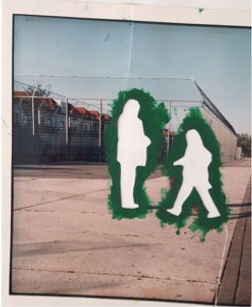

Image 7, 8, 9. Study into parent-child proximity and growing up, The Hague. Bregje Termeer 1998.
Visual anthropologists could benefit by working with artschools and museums to explore new ways to tell a story visually. Furthermore, musea offer great potential for combining achival image research with visual ethnographic research.
See for instance the Academy of Creative and Performing Arts, which is a partnership between the humanities department at Universiteit Leiden and the Royal Academy of Art. https://www.universiteitleiden.nl/en/humanities/academy-of-creative-and-performing-arts
References
Bennett, T., & Joyce, P. (2010). Material powers: Introduction. In T. Bennett & P. Joyce
(Eds.), Material powers: Cultural studies, history and the material turn (pp. 1–21). London: Routledge.
Brereton, R. (2009). Sketchbooks: The Hidden Art of Designers, Illustrators & Creatives.
Ingold, T. (2000). The perception of the environment. Essays in livelihood, dwelling and skill. London: Routledge.
Ingold, T. (2013). Making: Anthropology, archaeology, art and architecture. London: Routledge.
Middleton, Alexandra. 2020. "Sketching toward Alternate Openings in the Field." Visual
and New Media Review, Fieldsights, February 13.
https://culanth.org/fieldsights/sketching-toward-alternate-openings-in-the-field
Miller, D. (1987). Material culture and mass consumption. Oxford: Blackwell.
Pacini-Ketchabaw, Veronica & Kind, Sylvia & Kocher, Laurie L.M. (2017). Encounters with materials in early childhood education. New York and London: Routledge.
Rancière, J. (2004). The politics of aesthetics. The distribution of the sensible. G. Rockhill (Trans.). New York, NY: Continuum.
Taussig, M. (2011). I Swear I Saw This. Drawings in Fieldwork Notebooks, Namely My Own. Chicago: The University of Chicago Press.
Termeer, B. (2016). Disengaging Culturalism: Artistic strategies of young Muslims in the
Netherlands. Dissertation, University of Amsterdam.