The ‘Other-as-Self’ Portrait: Reverse Mirror Images
Bregje Termeer, PhD
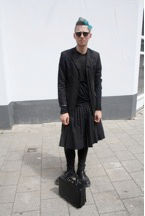
Image 20. Street fashion photos by Saeed (fictional name used in order to safeguard anonymity of respondents).
He walks into the street and spots someone: another human being that looks nothing like him. The man is pale. His hair is dyed blue. He is tall and wears a kilt over his trousers. All dressed in black, this they share. He asks if he can take a picture. The tall man with blue hair smiles and answers ‘of course’. He takes his small digital camera with a fixed lens. He looks through the viewer and sees the tall man with blue hair standing in front of a wall. The wall is of a neutral colour; this could be anywhere. He looks at the tall man with blue hair and presses the shutter button several times. This is what he does, making street fashion photos of people who arrest his gaze. They can be male or female, but they are always fashionable, quirky, beautiful, desirable and roughly his age. Sometimes it is the bone structure that moves him, sometimes it is the opal white skin. Sometimes it is the meticulously put together outfit that exudes wealth and status.
Browsing through his work in progress, Saeed explains to me why he likes certain pictures. He shows me the photos of the man with blue hair, and calls him his male muse (Image 20). He explains that more and more men are starting to wear leggings to go with kilts and says that he thinks this looks great, but that he himself could never wear a kilt because he is not tall enough and it would not look good on him. ‘Not everyone can wear a kilt’, Saeed states: ‘You have to wear it in a masculine way’.
Could these pictures be seen as alter egos? Could making pictures of other people be a way to find out about who I am, or who I could be, want to be? Sophie Woodward has shown how women make clothing choices in front of the mirror while asking themselves, ‘Is this me? Could this be me?’ (2007). Could looking through the viewfinder be like looking into a mirror that does not reflect a likeness, but something like a remote possibility, or even an elusive desire, an ‘as if’ version of me, a subjunctive me? A version of me that is temporarily actualised by making a picture of another?
If we follow the idea of objectification as the externalisation of the subject in material form (Miller, 1987) can we then view artistic production as a process, which generates material instances of the subjectivity of the maker? Such an intimate and embodied relationship between the artwork and the maker is suggested for instance by the photographer Roger Ballen, who in an interview with BBC radio explains that all of his photographs in reality are portraits of himself. Ballen makes clear that his photos are a mirror of different elements of himself and that they are the best way for him to learn about who he is. When asked to describe what his photographs mean to him, he answers:
They mean different things to me at different times, but never the same thing, and … I never actually try to figure out what the meaning of my work is, I really never do, it’s like looking at my own hand and say, well what’s the meaning of my hand, or looking at my nose and say what is the meaning of my nose; they’re part of my body, these picture, they’re part of my insides. (emphasis added)
For Ballen the signification or meaning of his photos is secondary to the performative potential they have for him. They are a means for the artist to develop his self-understanding, a process in which the artist does not separate himself from the work that he makes. Although photos are ‘only’ metaphorical (or metaphysical) extensions of the self and not literal, as for instance would be true of a prosthetic limb, Ballen’s words suggest that this metaphorical relationship can actually be experienced on an embodied level. Furthermore, the invocation of the internal organs by Ballen indicates that he has a visceral relationship to his photos as opposed to a cerebral one.
Saeed’s street fashion photos are objectifications of the artist, regardless of their subject matter. They offer a mirror in the sense that extending the self through objects makes it possible for the person ‘to stand outside of, and reflect upon, themselves’ (Woodward, 2007, p. 54). Moreover, by making portraits of other people, the artist objectifies himself in a material form that reflects both himself as well as the other. The street fashion portraits therefore inhabit a space between self and other; they have an intimate relationship with both the maker and the person in front of the camera. The idea of distributed personhood is illuminating here (Gell, 1998):
A person and a person’s mind are not confined to particular spatio-temporal coordinates, but consist of a spread of biographical events and memories of events, and a dispersed category of material objects, traces, and leavings, which can be attributed to a person …. The person is thus understood as the sum total of the indexes which testify, in life and subsequently, to the biographical existence of this or that individual. (pp. 222–223)
Gell argues that the personhood of the artist is distributed over his artworks. In Saaed’s specific case, his personhood is distributed over portraits of other people. The self is dispersed over several elements embodied by others. Put in the language of the structural model of grammars of identity/alterity (Baumann 2004) discussed above, the street fashion portraits by Saeed perform a type of encompassment that incorporates the other as an instance of the self. As Gerd Baumann explains: ‘Encompassment means an act of selfing by appropriating, perhaps one should say adopting or co-opting, selected kinds of otherness’ (2004, p. 25). On another level however, the series of fashion portraits also exhibits an Orientalist logic that works from attributing positive features to the other, which are lacking in the self, and at the same time showing an imperfect side to the perfect other: beautiful but sad, beautiful but tainted, etc., what Baumann has called ‘reverse mirror-imaging’ (2004, p. 19).
Gell’s notion of a temporally and spatially distributed personhood not only applies to individual artworks, but also and above all to the artist’s oeuvre (1998, p. 232). Saeed’s street fashion photos should thus not simply be analysed on their own, but as consisting of a larger body of work. Taken together, they are part of a process of becoming that does not culminate in one final photo but gains its meaning and agency through repetition and accumulation (Image 21).
However, Saeed’s oeuvre extends beyond the genre of street fashion portraits. Pictures of waste and decay unexpectedly come up when browsing through Saeed’s archive of street fashion photography (Images 22, 23); they sit uneasily between his shots of young and beautiful people. In these photos the image of a desired other (or self) is decentred, making space for a different genre that is actually antithetical. The gaze of the photographer is now turned away from the person in front of his camera, towards the space of the city and often towards the ground. What it finds there are discarded objects like an empty can and shards of glass and instances of perished nature such as fallen leaves and a half-eaten squirrel.
If we take Saeed’s fashion portraits as a series of alter egos that embody particular desires, then what to make of these other images? Could they be seen as the darker side of exit? The surplus that does not fit the ideal images, ‘the-rest-of-what-is’ (Van de Port, 2011b, p. 18)? What do these other images want, to use Mitchell’s language (1996)? Do these photos aim to bring under control the other side of desire by providing a kind of aesthetic barrier of composition and lighting that keeps them at a distance? The combination of a top-down perspective with light from above produces images that have virtually no shadows, which makes them look flat, nearly two-dimensional, and distant. Or, do these photos simply point to the impossibility of exit that reaches closure? Put in the structuralist language of the three grammars of identity/alterity, do these photos point towards a kind of ‘anti-grammar’ (Baumann, 2004, p. 42), in which the dynamic of selfing and othering is halted, or interrupted? Whatever the answers might be to these questions, Saeed’s photographs indicate that liminoid subjectivity does not always imply an authentic or whole self; it can also reveal a self that is fragmented, conflicted, and open-ended.